

Insight: PART 1:
Why Account Plans Fail –
and How to Fix Them
When it comes right down to it, gut instinct drives a lot of account planning. I'm guessing you know the scenario. Sales teams get busy. Suddenly year end arrives. Management wants to see an account plan now. So what are you going to do?
Don't get me wrong; I do have some faith in gut instincts. For instance, I travel a lot and when I eat out I can usually tell from eyeballing a restaurant whether it's popular.
But that doesn't mean I'm eating the best food a city has to offer. To do that, I've got to do some research – check with the concierge at my hotel or dig into best restaurant guide..
Same thing is true when it comes to laying the groundwork for a major sales initiative with your most important account. Sure, you can rely on your gut and information gleaned from day-to-day interaction with your account, to tell you where to focus an account plan that will impact your selling success for the year.
And this may be sufficient.
But what if it’s not? What if you and your team outline a very strategic game plan – but it's based on a set of assumptions that turn out to be only half right? Or not right at all? Maybe your customer is looking for serious business change, but your game plan has him settling for basic maintenance.
Research First, Plan Second
Developing and maintaining an account plan is a bit like strategic planning for executives; you've got a lot of information sources to consider and analysis to conduct before you actually start allocating resources. And just as a sound strategic plan is an essential foundation for solid shareholder relations, an account plan is a vital engagement roadmap that enables you to maintain value-based relationships with both the client and the account team – ultimately allowing you to leverage your good work to sell more.
So regardless of which planning methodology you use, the traditional account planning process begins with a sales team identifying a customer's business priorities. And that's the correct point. But let's be honest here; you and I know that what you often get is a visceral response based on gut feel or opinion rather than any qualitative research. When that's the case, here's what can happen:
- A golden opportunity/initiative is overlooked
- A non-priority from the customer's perspective is identified as a key focal point
In other words, going back to my earlier example, you find yourself trying to sell an upgrade when you could have sold a major enterprise-wide solution – all because your account plan was created without sufficient due diligence and analysis. It's focused on an invalid business initiative, and that means time spent supporting that invalid initiative is unimportant to your customer. One, you're not going to realize success; two, you’re personally out a nice chunk of change. Keep in mind your personal ROI is in play here.
But fortunately, there is a better way. And it's all about really understanding your account – those due diligence practices that hopefully you remember from your EFS program. Applying the principles taught in EFS will enable you to build a stronger and more effective account plan. But keep this in mind: You've got to validate customer business initiatives before you roll up your sleeves to get into account planning. That way you have a filter with multiple data sources to help guide the account planning process and ensure your game plan isn't based on faulty assumptions.
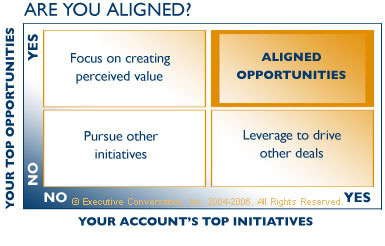
If you haven’t identified and validated your customer’s business initiatives, you risk working on issues important to you, but not necessarily your customer.
Next month – in Part 2 of this column – I'll steer you through a roadmap for account planning that reflects your customer's business initiatives in an actionable way
By Mike Rohan – EVP Global Sales, Executive Conversation, Inc.
 Request further information